Travel Agency Research
Role : UX Researcher
Time : 2 weeks
Tools : Figma
*
THE PROBLEM
The Polish travel industry is highly saturated, dominated by well-known players offering similar all-inclusive packages to the same handful of destinations. Despite the wide selection, many travelers still feel lost in the noise — overwhelmed by options, unsure who to trust, and left searching for something more tailored to their tastes and values. The goal was to explore the real needs, expectations, and frustrations of travelers today and to use those insights to define a strategic foundation for a new kind of travel agency. One that doesn’t just sell trips, but offers clarity, calm, and confidence in the decision-making process.
THE PROCESS
DISCOVERY

DESK RESEARCH
I began by conducting an in-depth analysis of top players like Itaka, TUI, and Rainbow. The objective was to understand:
What destinations dominate sales (e.g. Turkey, Greece, Egypt, Tunisia, Spain)
What user expectations and dealbreakers look like (price vs. experience, all-inclusive, safety)
Where post-COVID travel trends are shifting — especially around exotic trips like Zanzibar and the Maldives
From this, we gathered critical market intelligence that highlighted both saturation and white space opportunities in niche travel experiences and personalization.
USER INTERVIEWS
Next, I conducted semi-structured interviews with 5 potential customers. I focused on extracting insights around:
Pain points in travel planning
Trust factors and decision triggers
Emotional motivators behind trip choices
Key insight:
85% of users felt overwhelmed by information overload and sought expert support in planning personalized, stress-free holidays.
DEFINE
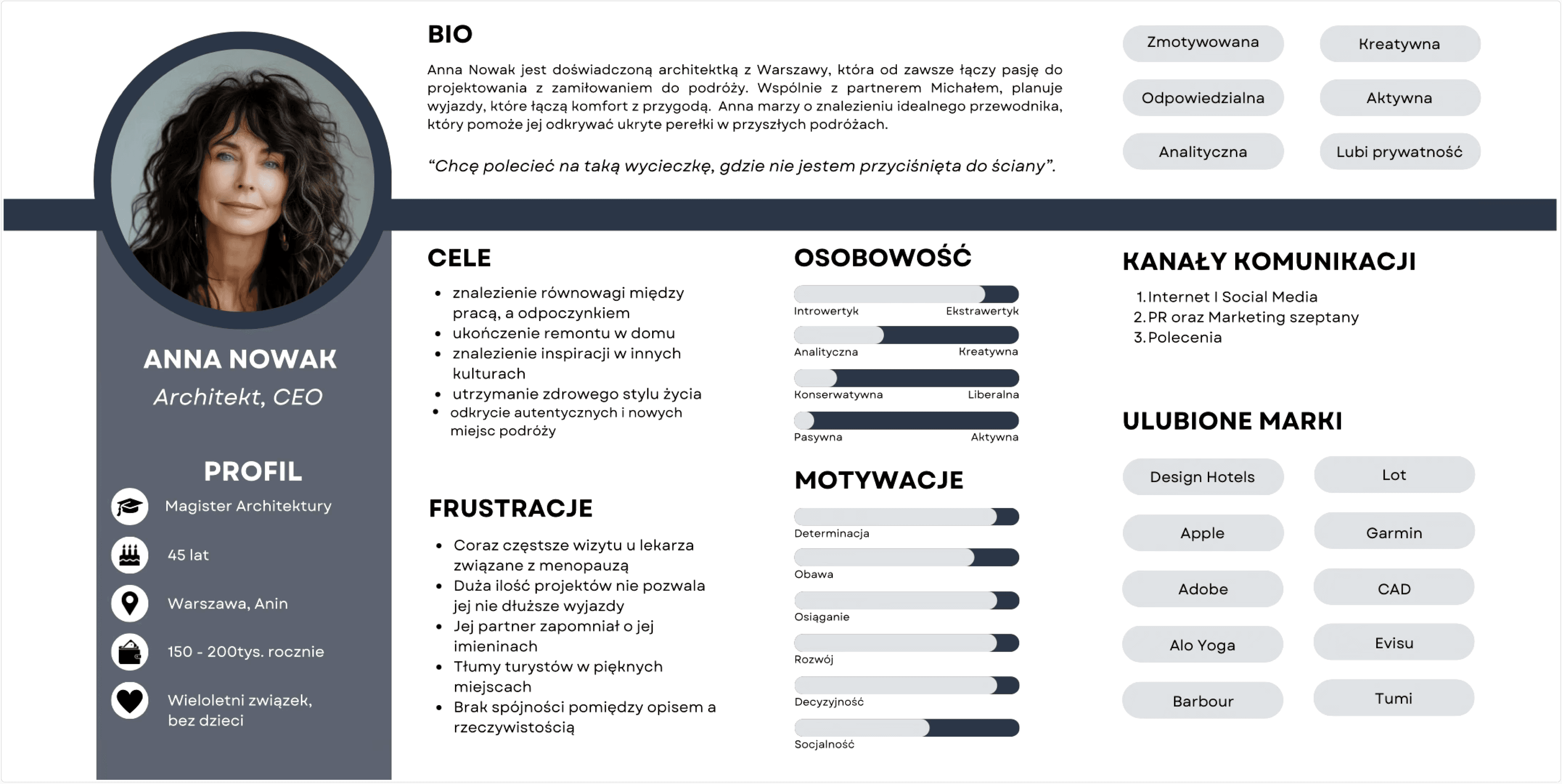
persona
Our primary persona became Anna, an architect from Warsaw. She values aesthetics, calm, and boutique experiences. Her planning process is meticulous, research-driven, and focused on avoiding tourist traps. She doesn’t want just another vacation — she wants meaningful, beautiful escapes that align with her lifestyle and values.
This persona helped us stay grounded in the reality of educated, discerning users who expect more than flashy offers — they want curation, clarity, and credibility.
EMPAHY MAP
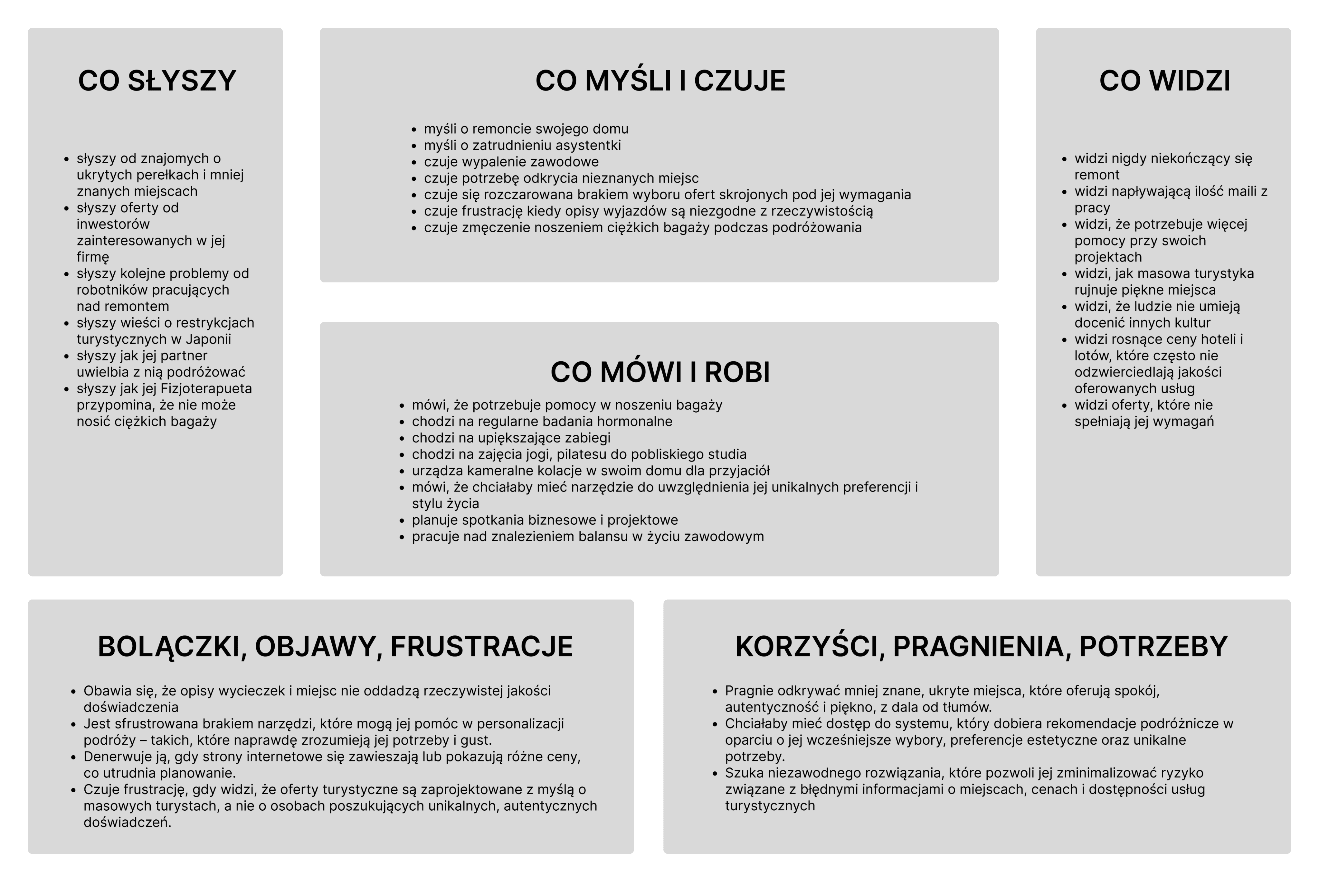
Using empathy mapping, I zoomed in on Anna’s inner voice. What was uncovered:
Thinks: “Is this place worth it? Will it be as beautiful as it looks?”
Feels: Anxious about wasting time or money, excited about hidden gems
Sees: Confusing options, lack of honest reviews
Does: Meticulous research, asks friends, cross-checks info
Empathy mapping revealed gaps between available services and emotional needs — especially trust, inspiration, and personalization.
USER JOURNEY MAP
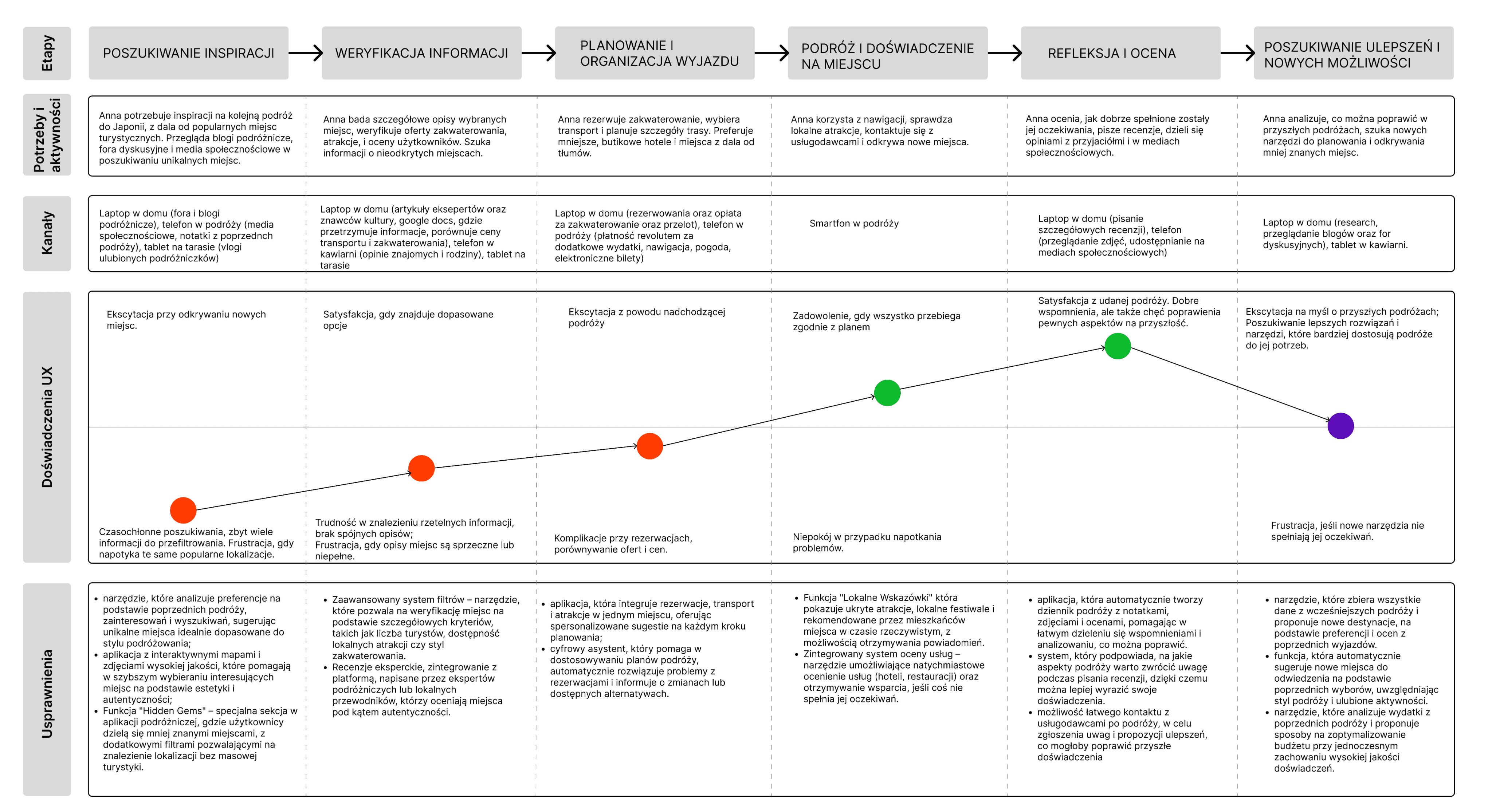
I mapped Anna’s journey from the spark of wanderlust to post-purchase satisfaction. The biggest friction points?
Overwhelm in comparing offers
Doubts about quality
Time consuming research
How could we intervene? Through transparent information, curated categories, expert support, and post-purchase reassurance.
CARD SORTING
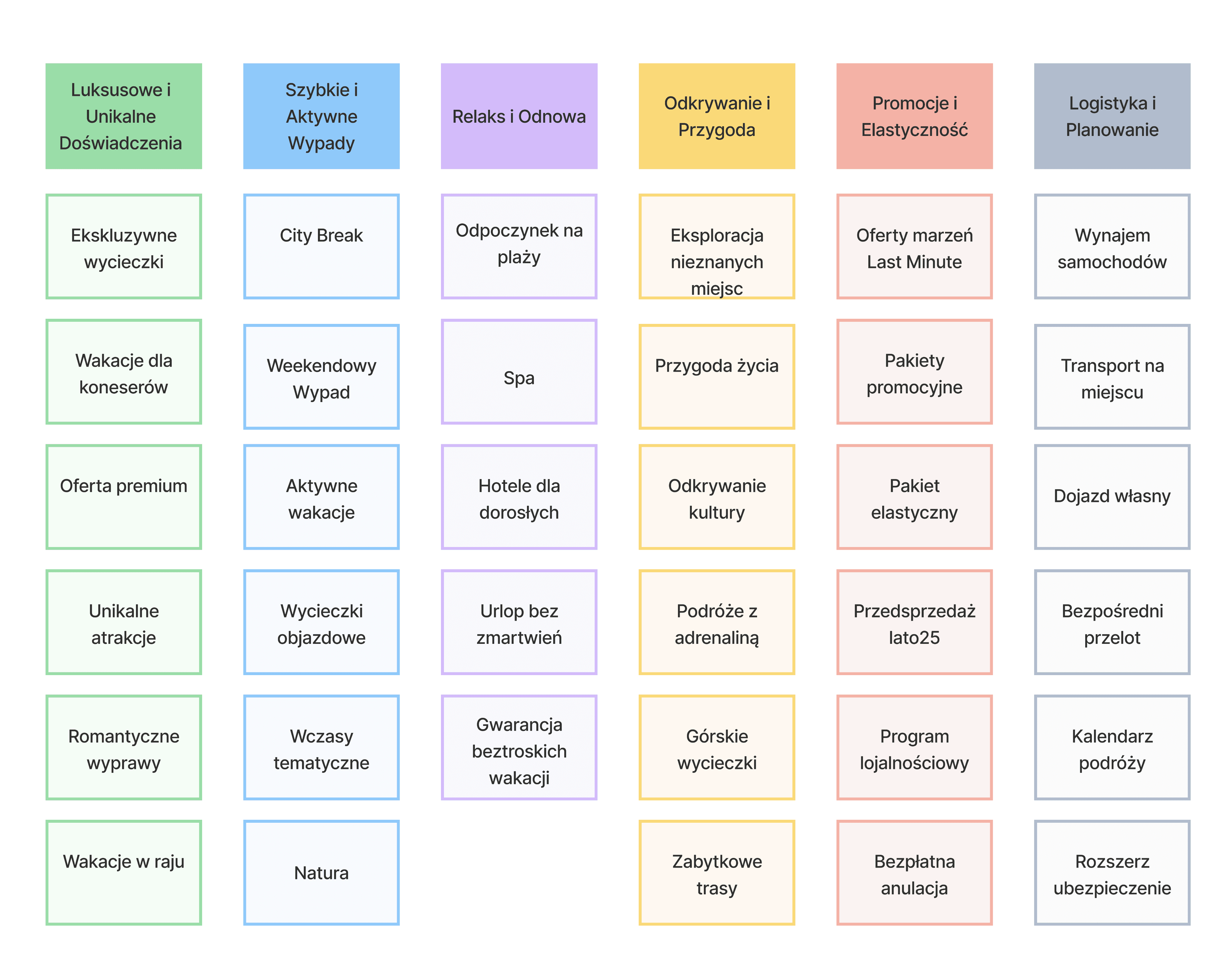
I conducted a remote card sorting exercise with users to explore how they naturally organize travel offers. Results helped define six key experience-based categories:
Luxury & Unique Experiences
Quick & Active Getaways
Relaxation & Wellness
Exploration & Adventure
Deals & Flexibility
Logistics & Planning
This structure is intuitive. It mirrors the way users think, allowing for better navigation and decision-making within the future product.
*
Project was done during the Fullstack UX/UI Designer Course
This project reminded me that designing for travel is really about designing for trust — especially in a landscape overflowing with choice. People don’t just want to buy a trip; they want to feel certain they’re making the right decision.
One of the most valuable lessons was seeing how emotional the booking process can be. Behind every search bar and destination filter is a person balancing dreams with doubts, excitement with hesitation. The research helped me understand that clarity, emotional safety, and agency are just as important as good UX.
This project sharpened my empathy, pushed me to listen beyond obvious answers, and showed how foundational research can quietly shape bold business decisions. It wasn't just about understanding users — it was about helping a brand be worth choosing.